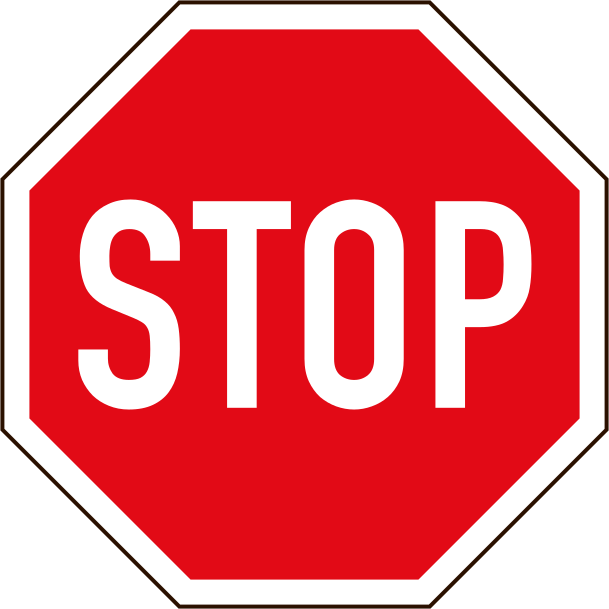
A stop sign is an eight-sided red octagon with a white border and the word STOP in white. It requires you to bring the vehicle to a complete standstill every time, whether or not there is other traffic. It is the only sign in the South African manual that uses the octagon shape, which is deliberate: you can recognise it by its outline alone, from behind, or when snow, dirt or a faded face makes the wording hard to read.
The official face of the stop sign
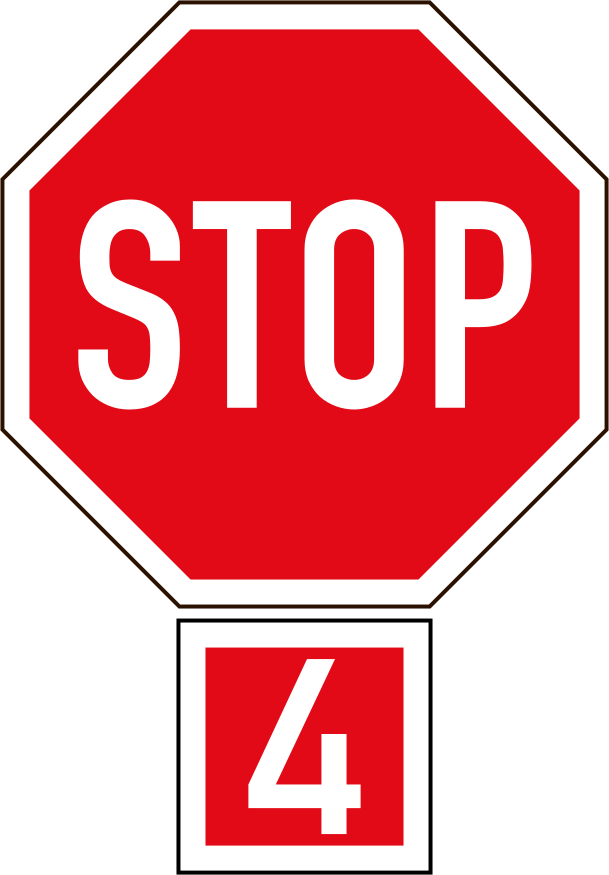
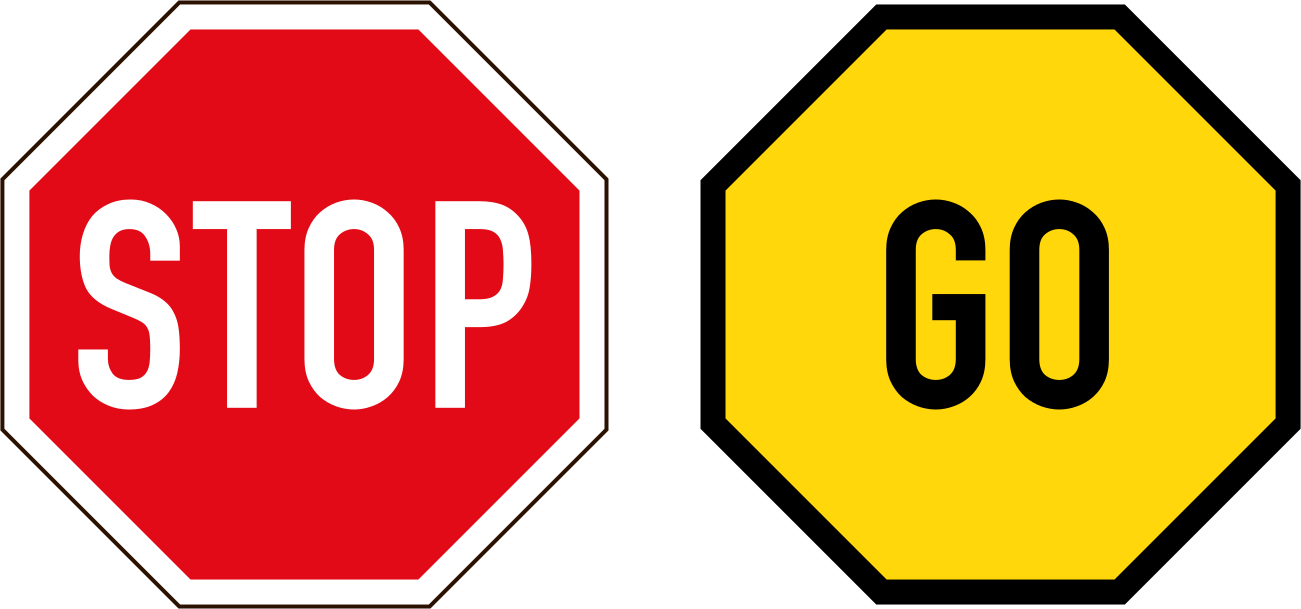
Sign faces on this page are the official diagrams from the South African Road Traffic Signs Manual (SARTSM), which implements the SADC Road Traffic Signs Manual. Codes are the manual’s own. K53 Academia is an independent study resource and is not endorsed by the Road Traffic Management Corporation.
What a stop sign means
- A stop sign means stop completely. The wheels must stop turning. Slowing to walking pace and rolling through is not a stop, and it is the single most common reason learners lose the mark on this question.
- Stop at the stop line. If there is no stop line, stop at the point where you can see approaching traffic, in line with the sign itself.
- Stopping is only the first half of the instruction. After you have stopped you must give way to any traffic already in the intersection or close enough to be a hazard, and only then move off.
What shape is a stop sign?
- The stop sign is an octagon - eight sides - with a red face, a white border and white lettering.
- No other sign in the South African Road Traffic Signs Manual is an octagon. Every other regulatory sign is a circle, a triangle or a rectangle, so the eight-sided outline identifies the stop sign on its own.
- The test asks about shape directly, and it asks about it more often than it asks about colour.
What you must do at a stop sign
- Come to a complete standstill before the stop line.
- Look right, then left, then right again, and check the road you are joining.
- Give way to any vehicle or pedestrian already in the intersection.
- Move off only when the way is clear, and do not creep forward while you wait.
Four-way stops
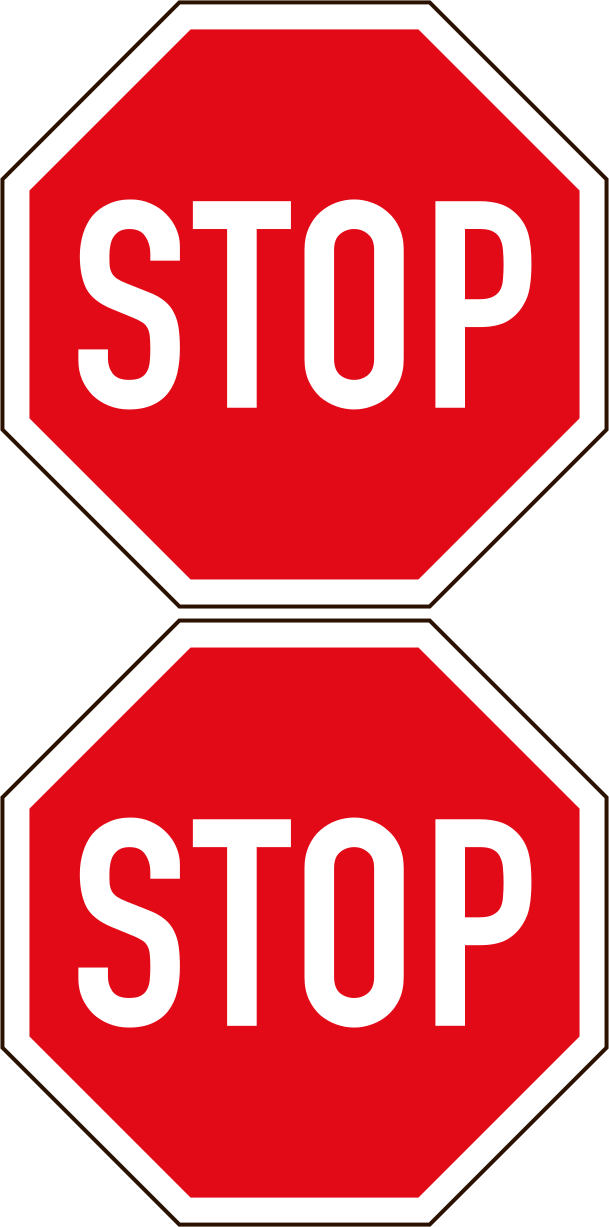
- A four-way stop is marked by the R1.4 sign and means every approach has a stop sign. Every vehicle stops; there is no priority road.
- The vehicle that arrived first has right of way. Order of arrival decides it, not size, not direction and not who is in a hurry.
- If two vehicles arrive at the same moment, the one on the right goes first, and each driver should be ready to yield rather than assume.
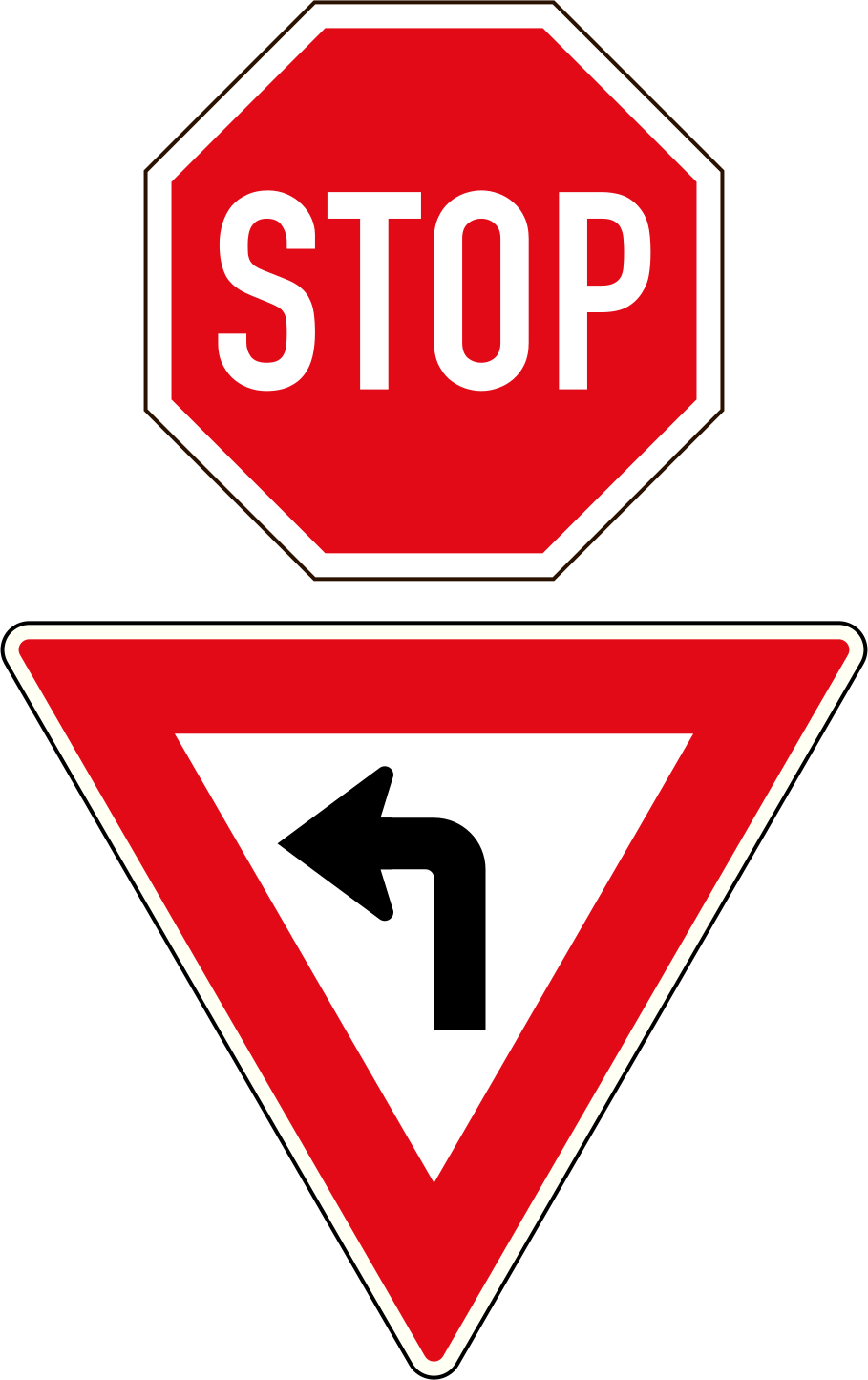
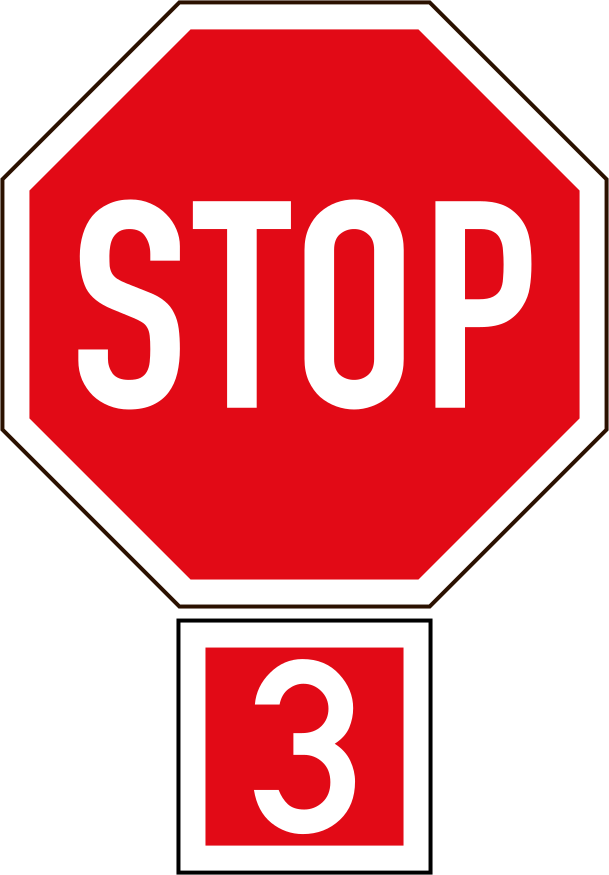
- R1.3 is the three-way version of the same rule, and R1.2 requires all directions to stop but lets drivers turning left give way rather than wait.
The sign it is confused with
The yield sign is the other red-bordered sign at an intersection, and learners mix the two up. A yield sign is an inverted triangle and does not require a stop if the way is clear. A stop sign is an octagon and always requires a stop.
R1.5 is a manually operated stop/go sign held by a traffic officer or a roadworks attendant. It carries the same force as the fixed sign for as long as it is displayed.
Do you have to stop at a stop sign if the road is empty?
Yes. The stop is required by the sign itself, not by the presence of other traffic. A rolling stop on an empty road is still a failure to stop.
Where this fits in the test
The road signs section of the learner’s licence test is 28 questions and you must get 23 of them right. Signs are asked by face, not by code — you are shown the sign and asked what it means, so learn the shape and colour rule first and the individual faces second.
All control signs · All road signs · Practice questions with answers