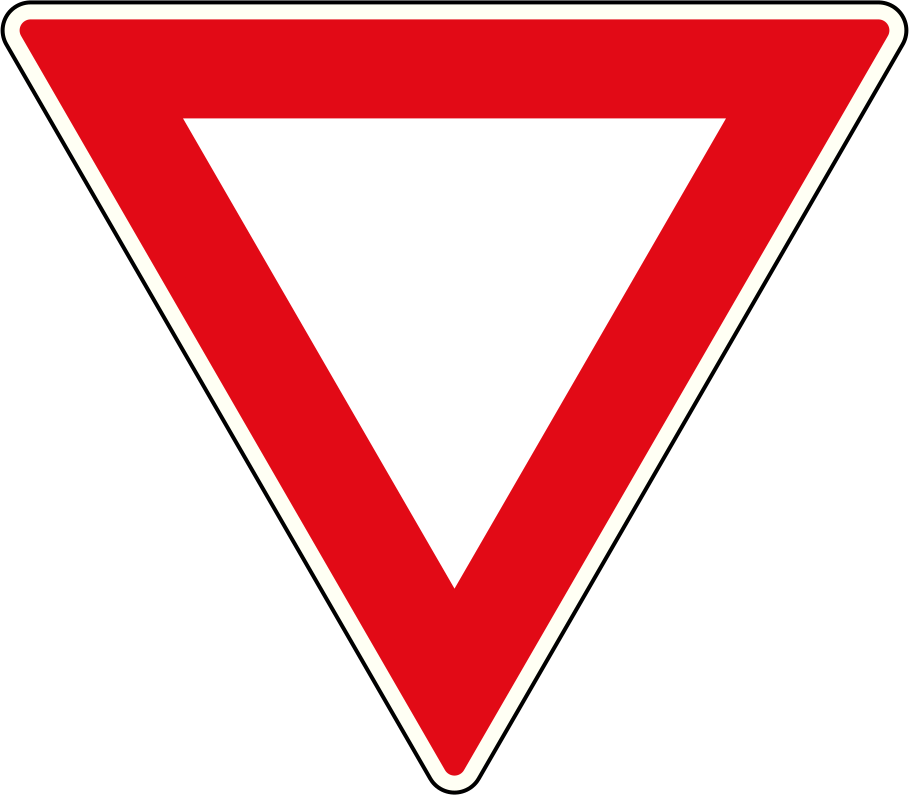
A yield sign is a triangle pointing downwards with a red border and a white face, and it means give way to traffic that already has right of way. Yield does not mean stop. It means arrive slowly enough that you can stop if you have to, and give way to anything already entitled to be there. If the way is clear you may proceed without stopping.
The official face of the yield sign
Sign faces on this page are the official diagrams from the South African Road Traffic Signs Manual (SARTSM), which implements the SADC Road Traffic Signs Manual. Codes are the manual’s own. K53 Academia is an independent study resource and is not endorsed by the Road Traffic Management Corporation.
What yield means
- To yield is to give way. You allow traffic that already has right of way to go first, and you join only when doing so will not make another driver slow down, swerve or stop.
- The sign does not require a stop, but it does require that you are able to stop. Approach at a speed from which stopping is possible, and cover the brake.
- If you have to stop to give way, stop. Yielding and stopping are not alternatives: stopping is what yielding becomes when the way is not clear.
How to recognise it
- An inverted triangle - a triangle pointing downwards - with a red border and a white face.
- It is the only regulatory sign that points downwards. Warning signs are also triangles but they point upwards, which is the distinction the test asks about.
- Like the stop sign, its shape identifies it even when the face is dirty or faded.
Yield sign and stop sign compared
- A stop sign is an octagon and requires a complete stop every time, whether or not the way is clear.
- A yield sign is an inverted triangle and requires a stop only when the way is not clear.
- Both require you to give way after you have stopped. The difference is whether the stop itself is compulsory.
Yield at crossings and traffic circles
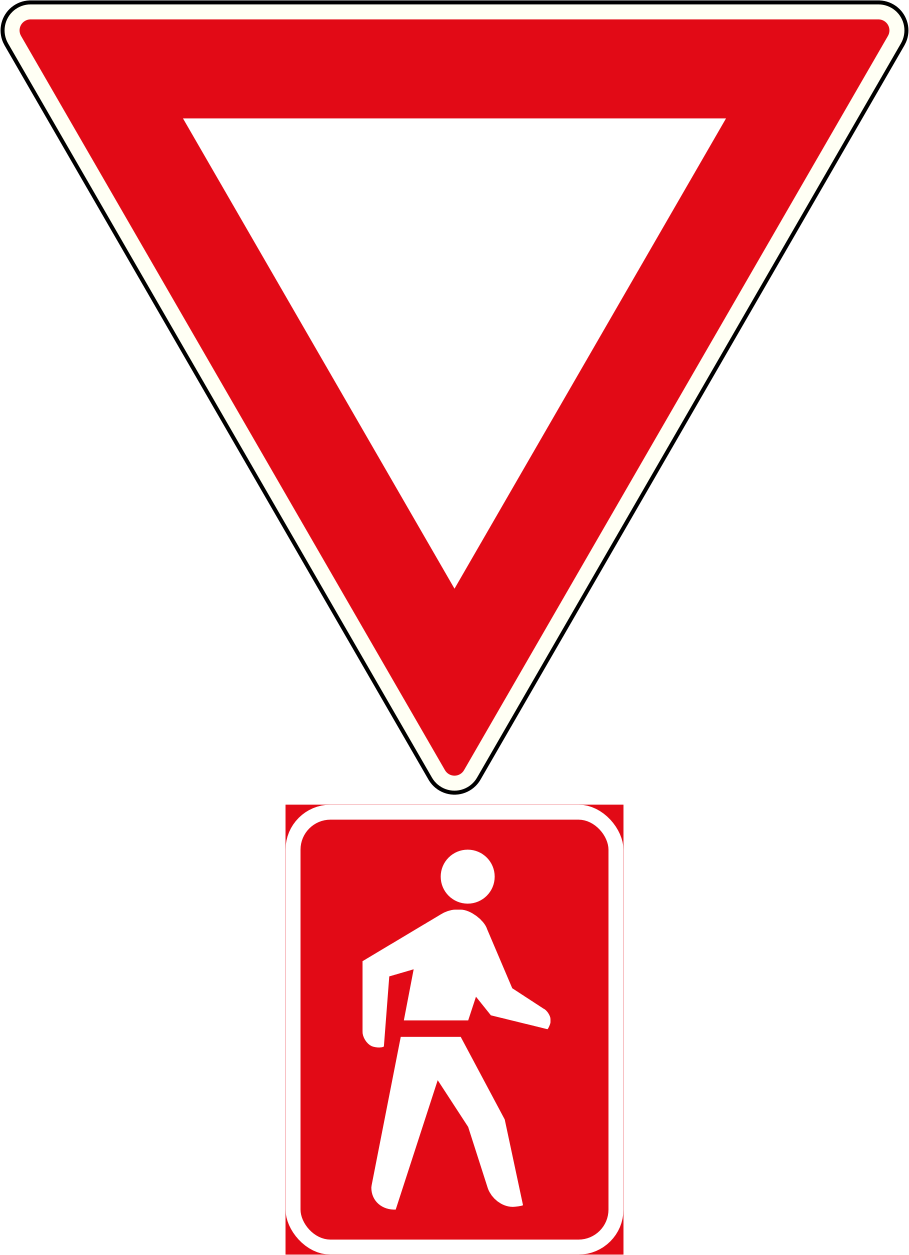
- R2.1 requires you to give way to pedestrians. It is used where a footpath crosses the roadway and the pedestrian has priority.
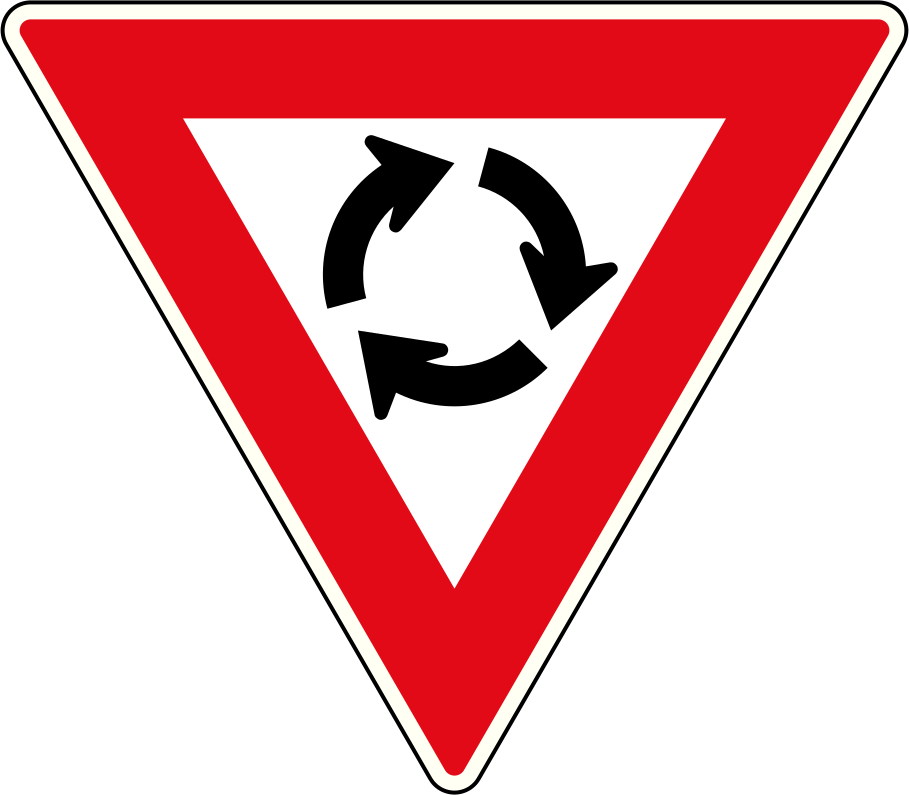
- R2.2 requires you to give way at a traffic circle. Traffic already in the circle has right of way, and you join when there is a gap.
- At a traffic circle with no signs and no markings, the ordinary right of way rules apply rather than the yield rule.
Do you have to stop at a yield sign?
No, not if the way is clear. A yield sign requires you to give way, and to be travelling slowly enough to stop if giving way requires it. A stop sign is the one that requires a stop every time.
Where this fits in the test
The road signs section of the learner’s licence test is 28 questions and you must get 23 of them right. Signs are asked by face, not by code — you are shown the sign and asked what it means, so learn the shape and colour rule first and the individual faces second.
All control signs · All road signs · Practice questions with answers